-1773984268797-566275199-1774356584763-534862193.webp)
SEO vs Local SEO
What’s the Difference and Which One Does Your Business Need?
Most business owners know they should show up on Google.
The confusing part is figuring out what kind of Google visibility actually matters.
Some agencies talk about SEO. Others talk about Local SEO. Some make both sound like the same thing. Others make them sound completely separate.
The truth is simpler.
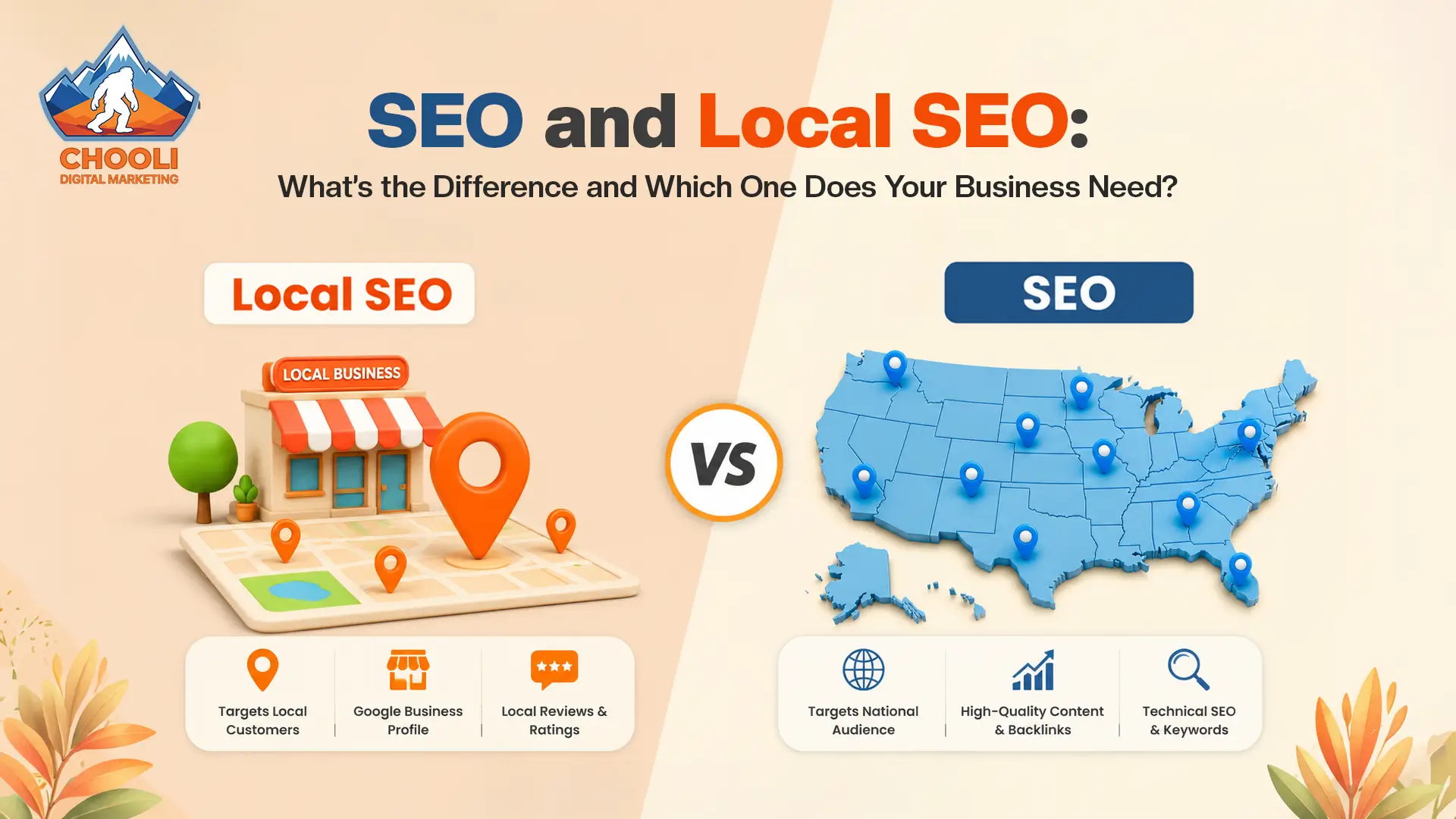
SEO helps your business show up in organic search results. Local SEO helps your business show up for searches tied to a specific location, especially in Google Maps and local search results.
For small businesses in Louisville, Jeffersonville, New Albany, Clarksville, Sellersburg, and surrounding Southern Indiana areas, both can matter. However, the right priority depends on your business model, service area, competition, and lead goals.
At Chooli Digital Marketing, we help businesses build clearer strategies around SEO services, Local SEO services, website improvements, and lead generation.
Quick Answer: SEO vs Local SEO
SEO focuses on improving your website’s visibility in organic search results. Local SEO focuses on helping your business appear in local search results, Google Maps, Google Business Profile listings, and location-based searches. Most local businesses need both because SEO builds long-term visibility while Local SEO helps nearby customers find and contact the business.
What Is SEO?
SEO stands for search engine optimization.
It is the process of improving your website so search engines can understand your pages and users can find helpful answers when they search online.
For a business, SEO usually focuses on improving visibility for searches related to services, problems, questions, comparisons, and buying decisions.
For example, someone may search:
- SEO services for small businesses
- Website not generating leads
- How long does SEO take?
- Google Ads vs SEO
- Web design for local businesses
A strong SEO strategy helps your website appear when people search for terms related to what your business offers.
SEO is not just about rankings. Rankings matter, but they are not the whole goal. The real goal is to attract the right visitors and turn that attention into leads, calls, form submissions, and business growth.
That is why SEO works best when your website has clear copy, strong service pages, good internal linking, and a conversion-focused structure. Chooli’s web development services can support SEO by making sure the website is built to help visitors take action.
What Is Local SEO?
Local SEO is a more location-focused version of search engine optimization.
It helps businesses show up when people search for services in a specific area or near them.
For example, someone may search:
- Local SEO Louisville
- SEO company near me
- Website design Jeffersonville IN
- Marketing agency New Albany
- Google Ads management Louisville
- Best contractor near me
Local SEO is especially important for businesses that depend on local customers, service areas, appointments, calls, estimates, or in-person visits.
Local SEO often includes:
- Google Business Profile optimization
- Google Maps visibility
- Local keyword targeting
- Reviews and reputation signals
- Local citations and directory listings
- Service-area content
- Location pages
- Local internal linking
- Name, address, and phone consistency where applicable
Because Chooli does not rely on a physical office location, the strategy should be built around service-area visibility. That means clearly targeting Louisville and nearby Southern Indiana towns through website content, Google Business Profile service areas, location pages, and local SEO signals.
The Main Difference Between SEO and Local SEO
A standard SEO strategy may help your business rank for broader topics, service questions, and informational searches. A Local SEO strategy helps your business appear when searchers are looking for a nearby company or a service provider in a specific city.
Here is a simple comparison.
| Category | SEO | Local SEO |
| Main Goal | Improve organic search visibility | Improve local and map visibility |
| Best For | Websites, blogs, service pages, authority building | Local businesses and service-area businesses |
| Search Examples | how SEO works, website not generating leads | local SEO Louisville, marketing agency near me |
| Key Assets | Website pages, blogs, content, backlinks, technical SEO | Google Business Profile, reviews, citations, location pages |
| Timeline | Long-term growth | Local visibility growth over time |
| Conversion Type | Website traffic, leads, inquiries | Calls, map actions, website visits, local leads |
Both matter, but they support different parts of the customer journey.
Why SEO Matters for Small Businesses
SEO helps small businesses become visible when customers are actively searching for answers, services, or solutions.
Unlike paid ads, SEO does not charge you for every click. It takes time, but it can build long-term visibility that continues supporting your business.
A strong SEO strategy can help your business:
- Rank for important service keywords
- Bring more qualified visitors to your website
- Build trust through helpful content
- Improve service page visibility
- Support long-term lead generation
- Reduce dependence on paid traffic
- Strengthen your overall digital presence
For example, a strong SEO page can help a business rank for service-related keywords. A helpful blog can answer common questions before a customer reaches out. A clear internal linking structure can help users and search engines understand how your content connects.
This is why Chooli’s SEO services focus on more than keywords. The goal is to improve visibility, clarity, and lead generation together.
Why Local SEO Matters for Small Businesses
Local SEO matters because many customers search with local intent.
They are not just browsing. They are often looking for a business they can contact soon.
A person searching for a local service may be ready to call, request a quote, book an appointment, or compare providers nearby.
Local SEO can help your business:
- Show up in Google Maps
- Improve Google Business Profile visibility
- Get found in service-area searches
- Build trust through reviews
- Increase local website visits
- Generate more calls and inquiries
- Support city-specific rankings
- Compete in Louisville and Southern Indiana markets
For Chooli, Local SEO is especially important because the business targets Louisville, KY and surrounding Southern Indiana towns, including Jeffersonville, New Albany, Clarksville, and Sellersburg.
That is why a dedicated Local SEO services page is important. It gives Chooli a clear page to explain Google Maps visibility, service-area targeting, local citations, reviews, and Google Business Profile strategy.
When Should a Business Focus on SEO?
A business should focus on SEO when it wants long-term search visibility and a stronger website foundation.
SEO is a smart priority when:
- Customers search online for your services
- Your website has weak organic traffic
- Your service pages are not ranking
- Your content does not answer customer questions
- Your competitors are showing up above you
- You want to reduce dependence on paid ads
- You want long-term visibility instead of short-term traffic only
SEO is also important when your business has educational or comparison-based topics customers search before making a decision.
For example, Chooli uses blog content like paid ads vs organic marketing and website signs that may be losing customers to answer questions that support service pages.
Those blogs help build authority and create internal links to important pages like SEO, Local SEO, Paid Ads, and Web Development.
When Should a Business Focus on Local SEO?
A business should focus on Local SEO when location matters to the buying decision.
This applies to many small businesses, including service providers, home service companies, medical offices, law firms, restaurants, consultants, contractors, and local professional services.
Local SEO is especially important when:
- Customers search by city or “near me”
- Google Maps visibility matters
- Reviews influence buying decisions
- The business serves specific towns or neighborhoods
- Phone calls and form submissions are important
- The business has a Google Business Profile
- The business wants to rank in nearby service areas
For service-area businesses, Local SEO should make the service areas clear. That means the website should include city-focused pages such as:
- Digital Marketing Louisville, KY
- Digital Marketing Jeffersonville, IN
- Digital Marketing New Albany, IN
- Digital Marketing Clarksville, IN
- Digital Marketing Sellersburg, IN
These pages help connect service-area targeting with the broader Local SEO strategy.
SEO and Local SEO Work Better Together
SEO and Local SEO should not compete with each other.
They should support each other.
SEO helps strengthen the website. Local SEO helps strengthen location-based visibility. Together, they create a stronger path from search to lead.
For example, a local business may use:
- SEO to improve service page rankings
- Local SEO to improve Google Maps visibility
- Blog content to answer customer questions
- Reviews to build trust
- Location pages to support service-area searches
- Internal links to connect related pages
- Website improvements to increase conversions
A business with strong Local SEO but a weak website may get attention but lose leads.
A business with strong SEO but poor local signals may miss nearby customers.
A business with both has a better chance of being found, trusted, and contacted.
Common SEO Tasks
SEO includes many website-focused improvements.
Common SEO tasks include:
- Keyword research
- Search intent research
- On-page optimization
- Meta title and description writing
- Heading structure improvements
- Service page optimization
- Blog content planning
- Internal linking
- Technical SEO checks
- Website speed improvements
- Mobile usability improvements
- Indexing checks
- Backlink and authority building
These tasks help search engines understand your website and help visitors navigate your content more easily.
Good SEO should make your website clearer, not more complicated.
Common Local SEO Tasks
Local SEO includes work that strengthens your visibility in a specific area.
Common Local SEO tasks include:
- Google Business Profile optimization
- Service-area updates
- Local keyword research
- Review strategy
- Local citation building
- Directory listing cleanup
- Location page creation
- Local internal linking
- Localized service content
- Google Maps visibility improvements
- Local trust signal improvements
For a service-area business like Chooli, Local SEO should focus on Louisville and surrounding Southern Indiana towns rather than relying on one physical address.
The goal is to make the service area clear and consistent across the website, Google Business Profile, and local signals.
How Your Website Affects Both SEO and Local SEO
Your website is the foundation of both SEO and Local SEO.
Search visibility can bring people to your site, but the website has to turn that traffic into action.
A strong website should:
- Explain services clearly
- Show where the business serves
- Build trust quickly
- Work well on mobile
- Load quickly
- Use clear calls-to-action
- Link related pages together
- Support service and location keywords
- Make it easy to contact the business
If a website is outdated, unclear, slow, or hard to use, SEO and Local SEO results may suffer.
This is one reason Chooli recommends improving the website before sending more money into ads. A stronger website can support SEO, Local SEO, and future paid campaigns.
For more on this, read 7 Signs Your Website Is Costing You Customers.
Should You Use Paid Ads Too?
SEO and Local SEO are strong long-term channels, but paid ads can help create faster visibility.
Paid ads can support your strategy when you need quicker traffic, want to test an offer, or need leads while organic rankings are still building.
However, paid ads work best when the website, landing page, and tracking are already clear.
For small businesses, the best order is often:
- Improve the website
- Strengthen SEO and Local SEO
- Add paid ads when the conversion path is ready
- Track leads and improve from real data
Which One Should Your Business Start With?
The right starting point depends on your current situation.
Start with SEO if your website has weak service pages, poor content structure, low organic traffic, or unclear keyword targeting.
Start with Local SEO if your business depends on local customers, Google Maps visibility, reviews, and service-area searches.
Start with website improvements if visitors are not converting into leads.
Start with paid ads only after your message, offer, landing page, and tracking are ready.
For many local businesses, the strongest first step is a combined foundation:
- Rewrite key service pages
- Build or improve Local SEO pages
- Optimize the Google Business Profile
- Create location pages
- Add internal links
- Improve calls-to-action
- Build helpful blog content
That approach creates a stronger base before investing heavily in ads.
Need Help Choosing the Right SEO Strategy?
SEO and Local SEO can feel confusing when they are explained with too much jargon.
They do not need to be.
SEO helps people find your website.
Local SEO helps nearby customers find your business.
Together, they help your business become more visible, trusted, and easier to contact.
Chooli helps small businesses in Louisville and Southern Indiana build clear SEO strategies around real business goals. Whether you need stronger rankings, better Google Maps visibility, location pages, service page copy, or a stronger website foundation, we can help you decide where to start.