-1773984268797-566275199-1774356584763-534862193.webp)
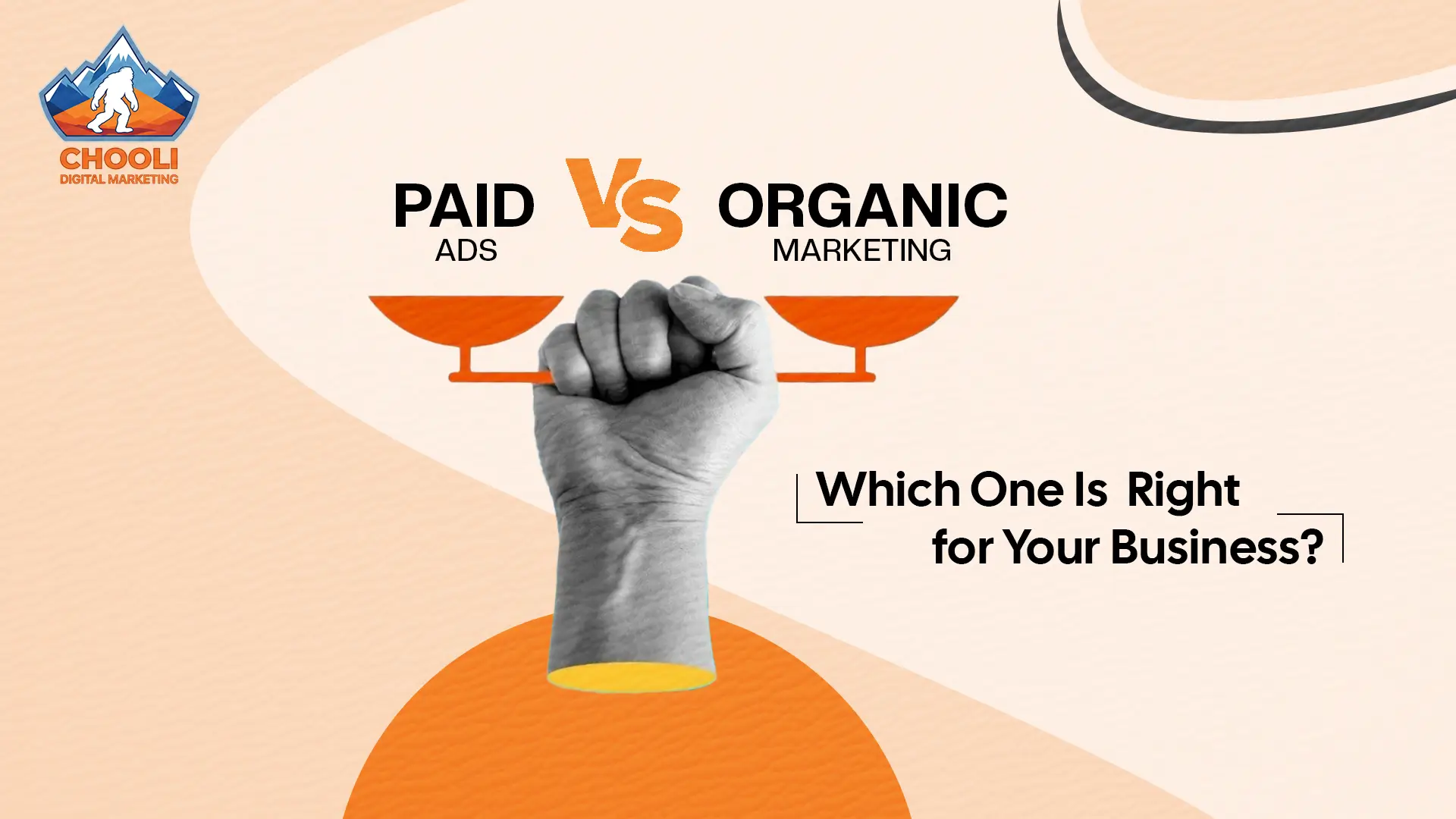
Paid Ads vs Organic Marketing
When businesses talk about growth, the conversation often turns into a debate between paid ads and organic marketing.
One side says ads are the fastest way to generate leads. The other side says organic marketing is the smarter long-term play.
The truth is more practical than that.
Paid ads and organic marketing are not enemies. They are tools. Each one does a different job, solves a different problem, and works best at different stages of business growth.
For most small businesses, the strongest strategy is not choosing one forever. It is knowing when to use paid ads, when to invest in organic marketing, and how both can work together.
If you are not sure which channel makes sense for your business, Chooli Digital Marketing can help you build a strategy around your goals, budget, website, and lead generation needs.
What Are Paid Ads?
Paid ads allow your business to pay for visibility on platforms like Google, Facebook, Instagram, and other online channels.
Instead of waiting for search rankings or organic content to grow over time, paid ads help you get in front of people faster.
Common paid advertising channels include:
- Google Ads
- Local Service Ads
- Meta Ads
- Search ads
- Display ads
- Retargeting ads
- Paid social campaigns
Paid ads work especially well when your business needs traffic, visibility, or leads quickly.
For businesses that want a faster lead-generation channel, Chooli offers paid ads services built around Google Ads, Local Service Ads, Meta Ads, tracking, and campaign optimization.
What Paid Ads Do Best
Paid ads buy speed.
They allow your business to put a specific offer in front of a specific audience quickly. This can be useful when you need traction now instead of months from now.
Paid ads are especially helpful when:
- You are launching a new service
- You need leads within a short time frame
- You want to test an offer or message quickly
- You already know your target audience
- You have a website or landing page that can convert traffic
- You want to support a seasonal campaign or promotion
In simple terms, paid ads are best when your business needs immediate visibility and has a clear plan for converting that attention into leads.
However, paid ads should not be treated as a shortcut around weak messaging or a poor website. If your landing page is unclear, your offer is weak, or your follow-up process is poor, ad spend can disappear quickly.
That is why paid ads work best when they are supported by strong web development, clear copy, conversion tracking, and a focused landing page.
Where Paid Ads Can Go Wrong
Paid ads can create movement without building much underneath.
You may get clicks, visits, and impressions, but that does not always mean you are getting qualified leads.
Paid ads can underperform when:
- The landing page is weak
- The audience targeting is too broad
- The message does not match the search intent
- The offer is unclear
- Conversion tracking is not set up properly
- The website does not build trust
- The follow-up process is slow or inconsistent
Many businesses conclude that “paid ads do not work” when the real issue is not the ad platform. The real issue is often the page, the offer, the tracking, or the strategy behind the campaign.
Paid ads also have a dependency problem. When you stop paying, visibility usually stops too.
That does not make paid ads bad. It simply means paid ads are rented attention. Rent can be useful, but it should not be the only foundation your business relies on.
What Is Organic Marketing?
Organic marketing is the process of building visibility, trust, and traffic over time without paying for every click.
Organic marketing can include:
- Search engine optimization
- Local SEO
- Blog content
- Google Business Profile optimization
- Reviews
- Organic social media
- Email marketing
- Helpful website content
- Brand trust and reputation
Organic marketing is usually slower than paid ads, but it builds assets that can keep supporting your business over time.
For example, a well-optimized service page can keep bringing in search traffic. A helpful blog post can answer customer questions before they contact you. A strong Google Business Profile can help local customers find and trust your business.
If your business wants long-term visibility, Chooli’s SEO services and Local SEO services can help build that foundation.
What Organic Marketing Does Best
Organic marketing builds long-term value.
Instead of renting attention through ad spend, organic marketing helps your business become easier to discover and trust over time.
A strong organic marketing strategy can help your business:
- Show up in Google search results
- Improve local visibility
- Build trust before a sales conversation
- Educate potential customers
- Reduce dependence on constant ad spend
- Support stronger website conversions
- Improve brand authority
Organic marketing works best when it is connected to business intent.
That means your content should answer real customer questions. Your SEO should support your services. Your Local SEO should help people find you in your service area. Your website should guide visitors toward action.
For local companies, organic marketing often becomes stronger when it combines SEO, Local SEO, helpful blog content, and a website built to convert.
Where Organic Marketing Can Go Wrong
Organic marketing can fail when it becomes random activity instead of a clear strategy.
Many businesses publish a few blog posts, make some social media updates, and expect leads to arrive quickly. When that does not happen, they stop before the strategy has time to build momentum.
Organic marketing can also become too vague.
This happens when businesses:
- Write blogs no one is searching for
- Post on social media without a purpose
- Target keywords that do not connect to services
- Focus on traffic instead of qualified leads
- Avoid improving the website
- Ignore local search opportunities
Organic marketing should not be treated as “free marketing.” It still requires planning, time, consistency, and optimization.
The goal is not just to publish content. The goal is to create useful content that supports search visibility, builds trust, and helps people take the next step.
Paid Ads vs Organic Marketing: Which One Should You Choose?
The right choice depends on your business stage, goals, budget, and current website.
New Businesses
New businesses often need visibility quickly. Paid ads can help test offers, bring in early traffic, and create faster feedback.
However, organic marketing should still begin early. Even basic SEO, service pages, and helpful content can create a stronger foundation over time.
A new business should usually focus on:
- Clear website messaging
- Basic SEO setup
- Strong service pages
- Paid ads for testing and early traffic
- A plan for long-term organic growth
Businesses With Inconsistent Leads
If your business already exists but lead flow is inconsistent, a blended strategy often works best.
Paid ads can help create short-term visibility while organic marketing builds long-term stability.
This type of strategy may include:
- Google Ads for faster leads
- SEO for long-term traffic
- Local SEO for Google Maps visibility
- Blog content for customer education
- Website improvements for better conversions
Businesses Ready to Scale
More established businesses often benefit from using both channels together.
At this stage, paid ads can support specific campaigns, while organic marketing helps improve profitability over time.
The stronger your website, content, search visibility, and reputation become, the less pressure you place on paid ads alone.
Why Paid Ads and Organic Marketing Work Better Together
Paid ads and organic marketing are strongest when they support each other.
Paid ads can bring immediate traffic. Organic marketing can build trust and long-term visibility. Your website connects both channels by turning visitors into leads.
A strong combined strategy may include:
- Paid ads for immediate traffic
- SEO for long-term search visibility
- Local SEO for service-area discovery
- Blog content for education and trust
- Retargeting ads for interested visitors
- Landing pages for specific offers
- Conversion tracking for better decisions
This turns your marketing into a system instead of a collection of disconnected tactics.
For example, a business could use paid ads to drive faster traffic while building SEO and Local SEO for long-term visibility. At the same time, the website should be improved through strong web development so traffic has a better chance of becoming leads.
Your Website Matters More Than Most Businesses Realize
Paid ads and organic marketing both send people to your website.
That means your website plays a major role in whether your marketing works.
Even strong traffic can fail if your website:
- Does not explain your services clearly
- Loads slowly
- Looks outdated
- Lacks trust signals
- Has weak calls-to-action
- Is difficult to use on mobile
- Does not guide visitors toward contacting you
Before investing heavily in paid traffic, your website should be clear, professional, and conversion-focused.
If your website is not generating enough leads, read our guide on website signs that may be losing customers.
Budget Should Follow Strategy, Not Hype
A common mistake is chasing whichever marketing channel sounds popular at the moment.
One month it is Google Ads. The next month it is SEO. Then social media. Then video. Then another trend.
Instead, your budget should match the role each channel plays in your business.
Before choosing paid ads or organic marketing, ask:
- Do we need leads quickly?
- Do we have a website that can convert traffic?
- Is our offer clear?
- Are we building long-term visibility?
- Are we relying too heavily on one lead source?
- Can we track which channels generate qualified leads?
Paid ads and organic marketing can both work, but they need clear goals, tracking, and a website that supports conversion.
The Biggest Mistake to Avoid
The worst choice is not choosing paid ads over organic marketing or organic marketing over paid ads.
The worst choice is using either one without a clear system behind it.
Paid ads without conversion strategy become expensive traffic.
Organic marketing without search intent becomes slow activity.
Both channels without measurement become noise.
Every marketing channel should have a clear role. It should help generate qualified traffic, leads, calls, appointments, visibility, or long-term business value.
If it does not, the strategy needs to be improved.
So, Which Is Better for Your Business?
Paid ads are better when you need faster visibility, quick testing, or short-term lead generation.
Organic marketing is better when you want long-term visibility, trust, and reduced dependence on constant ad spend.
For most small businesses, the best answer is both.
Start with a clear website, strong service messaging, and a realistic growth plan. Then use paid ads for speed and organic marketing for long-term strength.
If you are not sure where your business should start, Chooli can help you identify the best next step.